
Mortgage SEO case study
From 200 to 700+ Monthly Organic Clicks: A South Carolina Mortgage SEO Case Study
Client identity omitted for privacy | Updated September 19, 2026
- Organic Google Search clicks grew from roughly 200 to more than 700 per month with no paid advertising.
- Two tracked website conversion channels generated 164 contactable mortgage inquiries from November 1, 2025 through August 31, 2026, an average of 16.4 per month.
- The inquiry total excludes phone calls, direct messages, and people who contacted the broker after seeing information in Google's generative-AI results.
This mortgage website turned organic visibility into measurable business opportunities. It grew from roughly 200 to more than 700 monthly Google Search clicks and produced 164 contactable mortgage inquiries through two tracked website forms. No paid advertising was used to generate the organic clicks.
Documented results
The Results at a Glance
700+
Monthly organic Google Search clicks
164
Contactable inquiries from two tracked forms
16.4
Average tracked inquiries per month
$0
Paid advertising used for these clicks
Tracked conversion proof
164 Contactable Mortgage Inquiries From Two Tracked Website Channels
These were high-intent organic visitors who asked for personalized mortgage information after reaching the website. The total counts only inquiries with contact information submitted through the two forms below.
164
Contactable inquiries recorded
16.4
Average inquiries per month
2
Tracked conversion channels
Why search intent matters
These visitors reach the website while actively looking for mortgage information or a lending solution. That makes the opportunity fundamentally different from a cold contact or a shared lead sold to several lenders.
Request a Rate
Visitors requested personalized rate information after researching a loan program or comparing financing options.
Submit Your Scenario
Borrowers submitted purchase, refinance, investment, income, credit, or property details for direct review.
From search intent to immediate follow-up
High-intent visit
Borrower researches a solution
Direct request
Rate or scenario form
Live record
Saved to Google Sheets
Immediate alert
Emailed to the broker
Only two channels were counted
The total does not include phone calls, direct emails, chat contacts, social messages, or other website actions. It should be read as a documented minimum, not a complete count of every opportunity influenced by the website.
Direct contacts from AI results cannot be fully tracked
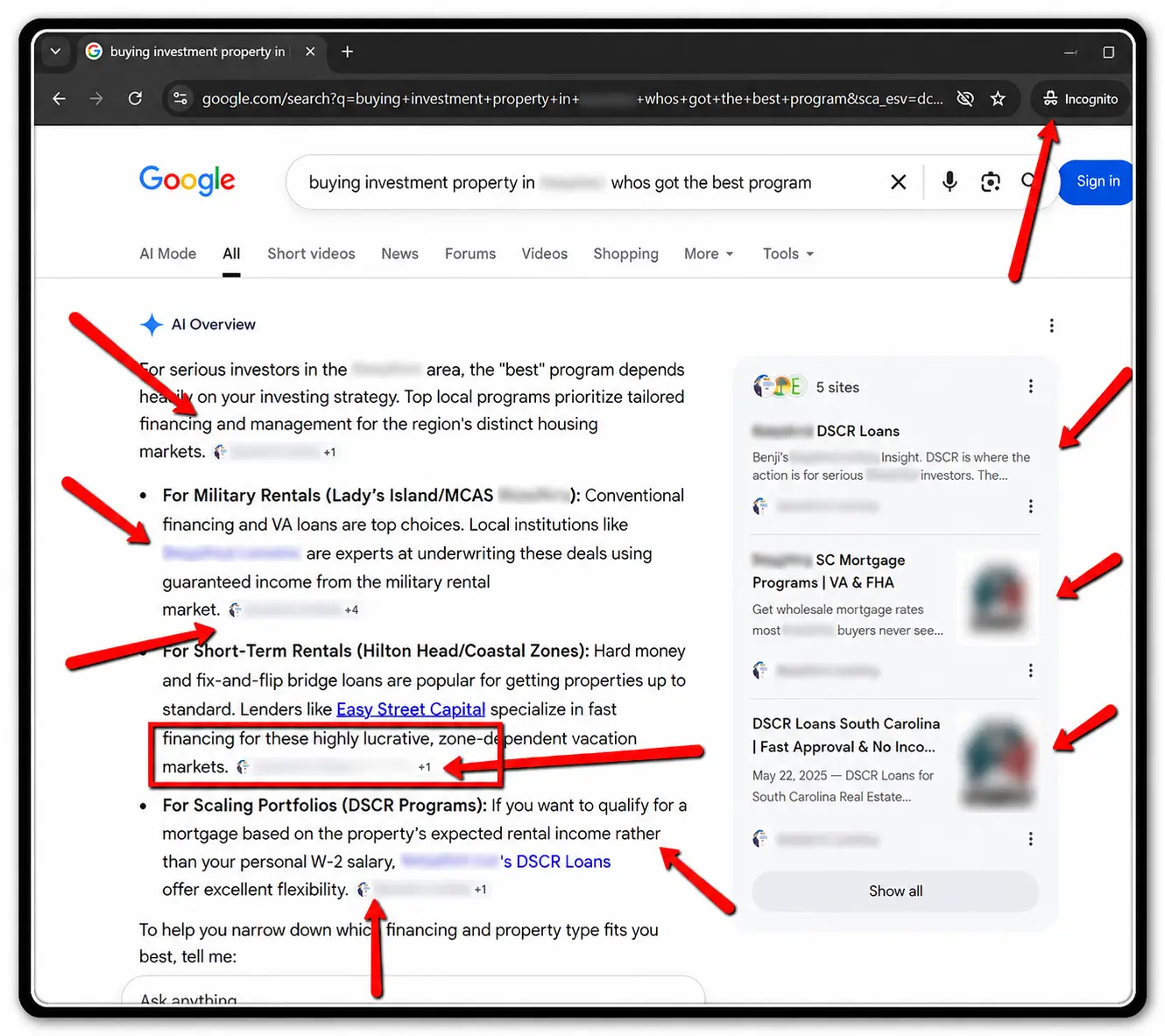
Google's generative-AI results can display a company's phone number and other contact information directly in the search result. A person can call without visiting the website or submitting a form, so those contacts cannot be reliably attributed to this page-level conversion count.
Measurement: Submissions from the Request a Rate and Submit Your Scenario forms were recorded in separate Google Sheets and emailed to the broker for immediate follow-up. The reporting period covers ten complete months.
Traffic value analysis
What Would This Traffic Cost to Buy?
A 30-day Search Console snapshot recorded 554 organic clicks and 82,732 impressions. Applying a range of mortgage paid-search costs placed the modeled monthly traffic value at approximately $6,200 to $6,700.
554
Organic clicks in the measured 30-day period
82,732
Google Search impressions in that period
$6.2K-$6.7K
Modeled monthly traffic value
This is a traffic-value estimate, not booked revenue. It translates the documented clicks into an approximate paid-search equivalent. It does not assign a value to generative-AI impressions, untracked calls, submitted inquiries, or funded loans.
Generative-AI visibility
37,405 Google Generative-AI Impressions in 92 Days
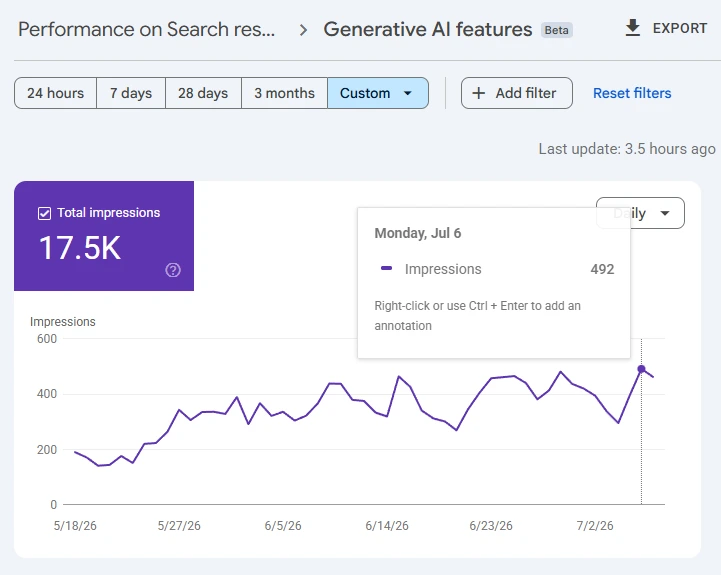
Google Search Console recorded 37,405 impressions across Google's generative-AI search features from June 17 through September 16, 2026. That is an average of approximately 407 impressions per day. These impressions measure visibility in features such as AI Overviews and AI Mode. They are not counted as website visits or inquiries.
37,405
Generative-AI impressions
70
Distinct cited queries in a third-party index
66
Queries where the client was cited first
Two sources measure two different things
Search Console measures how often the site appeared across Google's generative-AI features. A separate third-party search-results index identified 70 queries where an AI Overview cited the site and found it in the first citation position for 66 of them. The two numbers should not be added together or treated as conversions.
What produced the growth
Mortgage Expertise, Search Demand, and Useful Pages
The project was not built around a single ranking trick. Keyword and market research identified questions local borrowers were already asking. The website then answered those questions with useful mortgage content, clear page structure, internal links, and ongoing improvements based on Search Console performance.
Validated search demand
Pages were planned around borrower questions and loan-program searches with demonstrated local demand.
Firsthand mortgage knowledge
Tim's experience as a former licensed MLO and HUD-certified housing counselor shaped the answers and practical detail.
Connected website structure
Program pages, market guides, supporting articles, and internal links built topical relevance instead of isolated posts.
Learn more about the commercial service behind this work on the mortgage lead generation page, or see how the site is structured for Answer Engine Optimization.
Search Console evidence
The Organic Growth Timeline
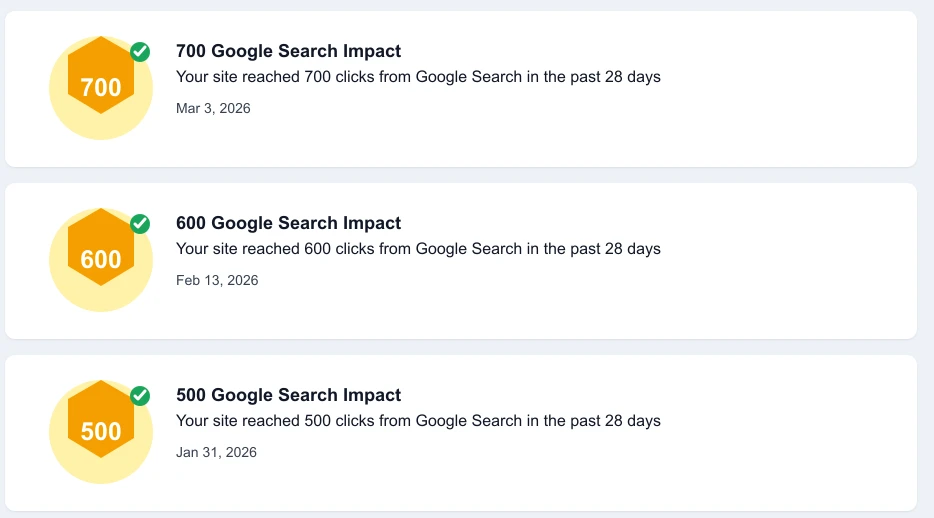
The screenshots below show the progression from an established baseline through the later acceleration. Reporting windows differ, so the images document milestones rather than a single continuous chart.
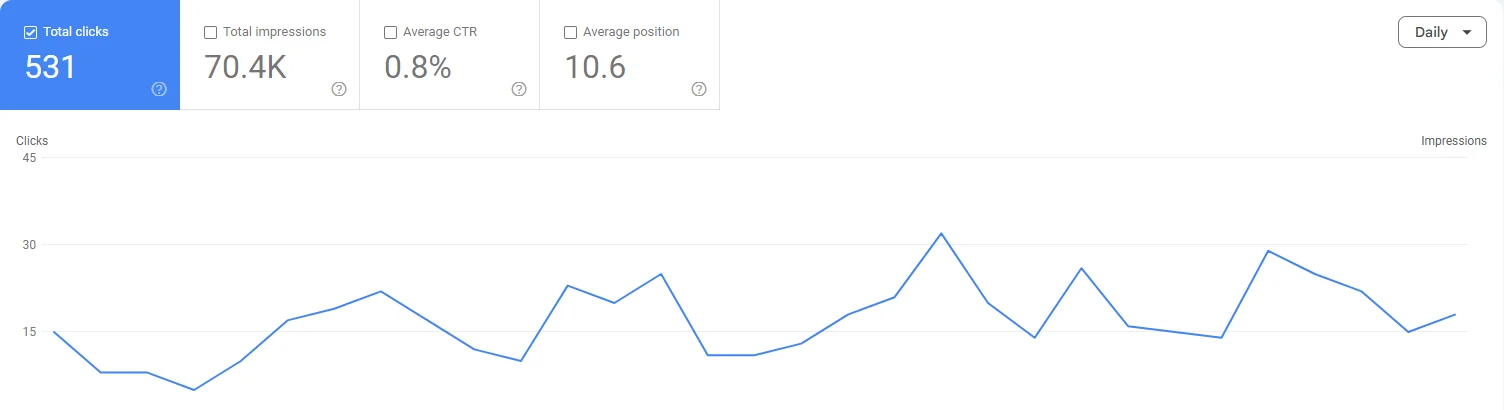
January 2026 baseline
The site had 531 clicks, 70.4K impressions, and an average position of 10.6 in the displayed period.
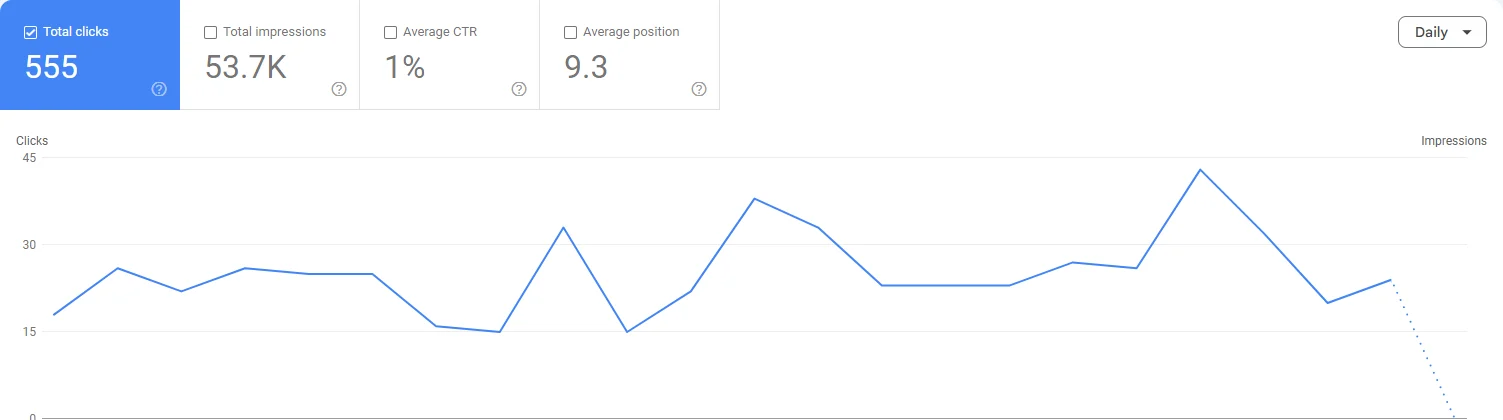
Continued climb
A later view showed 555 clicks and a stronger average search position before the 700-click milestone.
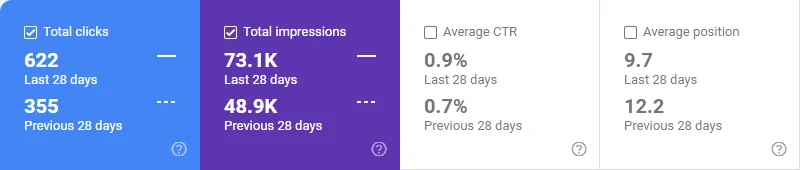
Acceleration
The comparison view showed 622 clicks in the recent period versus 355 in the preceding period.
What This Case Study Proves
Organic visibility can become a measurable mortgage lead channel when the website answers real borrower questions and provides a clear next step. This project produced traffic, contactable inquiries, and visibility in Google's generative-AI results. It does not prove that every click becomes a lead or every inquiry becomes a funded loan.
Paid advertising rents each visit. A useful mortgage website builds an asset that can continue earning visibility, inquiries, and trust after a page is published.
Frequently Asked Questions
Are these results guaranteed for every mortgage website?
No. Results depend on the market, competition, existing authority, website quality, and the consistency of the work. This case study documents one mortgage project and does not promise the same outcome for every lender.
How were the mortgage inquiries counted?
The total includes contactable submissions from two website forms: Request a Rate and Submit Your Scenario. Each submission was recorded in Google Sheets and emailed to the broker. Phone calls, direct messages, chat contacts, and direct contacts influenced by search or AI results were not included.
How long can mortgage SEO take to produce meaningful results?
Timelines vary, but meaningful organic growth usually requires several months of publishing, technical improvement, and refinement. This project built momentum over time and accelerated after more pages began earning impressions, clicks, and search authority.
Does Tim Armstrong Marketing work with mortgage professionals nationwide?
Yes. Tim Armstrong Marketing serves mortgage brokers and loan officers nationwide and works with only one mortgage professional per market. Contact Tim to check whether your territory is available.
Build a Mortgage Website That Produces Opportunities
Tim Armstrong Marketing works with one mortgage professional per market. Call or contact Tim to discuss your search opportunity and check whether your territory is available.